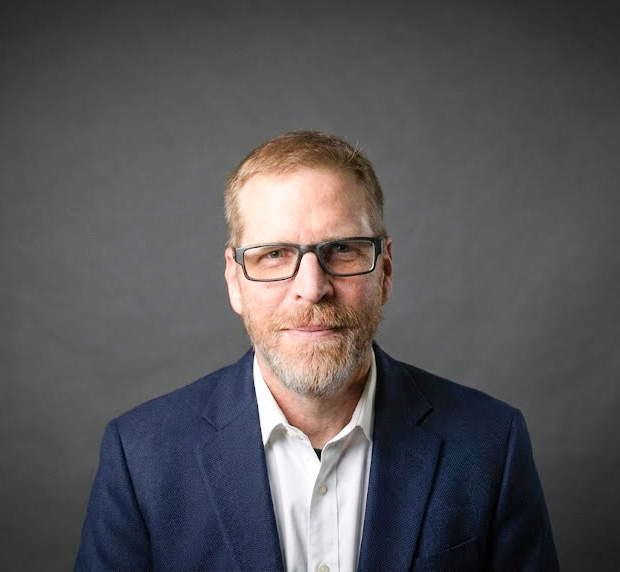
Clyde Simpson

Product & Portfolio Operations Leader

Reading how work flows.
Tuning how it gets done.

My role is to make execution visible, giving leaders a signal they can trust and the clarity to make better decisions.

I connect strategy, priorities, investment, capacity, ownership, and delivery so decisions reflect execution reality instead of activity reporting — the result is more predictable execution, decision-grade telemetry, and greater confidence in where time, money, and capacity are being invested.

Clyde Simpson

At A Glance

Clyde Simpson is a systems-minded operator who leads the operating environment that turns strategy into execution. He builds what is missing, repairs what no longer works, and continually improves what must keep running, connecting priorities, investment, capacity, ownership, and delivery so leaders can see what is moving, what is constrained, and what decisions are required.

The Track Record

  • Leadership Scope

    40+ team portfolio | 20-person delivery operations organization

  • Enterprise Experience

    Bank of America, Lowe's, Family Dollar, Zelis

  • Domain Breadth

    Banking | Retail | Healthcare Payments | SaaS | AI/ML | Data Platform | Telecommunications | Infrastructure

  • Discipline Origin

    U.S. Coast Guard (Electrician's Mate)
    Emergency Coordinator

  • Credentials

    Lean Six Sigma | PMI-ACP | SAFe | ABCP

How I Work

I do not start with a framework or tool — I start by understanding how work actually moves through the organization, how decisions are made, where capacity is consumed, and what leaders need to see to make effective tradeoff decisions.

I read how work actually flows through organizations: what they can absorb, where the constraints actually live, and what the next move needs to be.

I map the people, the narratives, and the evidence. Then I compare them. Does the data match the story? Does the ownership model match how decisions are actually made? Does reporting reflect the work, or only the activity around the work?

What You Can Expect From Me

  • I don't arrive with answers. I arrive to learn.
    Every company has its own history, pressures, constraints, and ways of working. Before recommending change, I take the time to understand how the organization actually operates.
  • I collect perspectives before I collect data.
    Leaders, managers, and the people doing the work often see different parts of the same reality. Understanding those perspectives helps explain what the numbers can and cannot show.
  • I build relationships and credibility before I push for change.
    People support what they help shape. Trust comes from listening, following through, and accurately representing what I learn, even when it isn't flattering.
  • As patterns emerge, I test observations with data.
    I separate symptoms from causes, challenge my own assumptions, and validate what I am seeing before drawing conclusions.
  • Only then do I develop a plan.
    By connecting strategy, priorities, investment, capacity, ownership, and delivery into a coherent picture, it becomes possible to identify what should change, why it should change, and what the organization can realistically absorb.

Selected Work

The way I work is ultimately reflected in what changes.
These examples illustrate how I approach complex execution challenges, what I discovered, and what improved as a result.

Installing the Governance System That Connects Investment to Outcomes

The Situation

The engagement began as a targeted effort to improve delivery predictability across two product lines where commitments repeatedly carried over and leaders lacked reliable visibility into execution. Embedded analysis revealed a broader operating gap: product ideas, customer requests, funding decisions, delivery work, financial reporting, and post-release accountability moved through separate processes and tools, leaving no governed path from the decision to invest through the outcome produced.

What I Found

The organization did not lack effort, skill, or delivery tools. It lacked a common operating system for deciding what work should exist, determining when it was sufficiently defined and funded, protecting teams from unauthorized demand, and preserving accountability through delivery. Work could enter execution without clear financial or strategic authority, while leaders depended on manually assembled information to understand progress, cost, readiness, and whether an investment should continue, change, or stop.

What Changed

I designed and installed an enterprise operating system spanning product discovery, customer intake, investment governance, funding, readiness, planning, team execution, validation, production, and hypercare. The system linked every delivery item and hour of labor to an approved investment, enforced readiness and workflow controls, preserved distinct paths for product and customer work, and produced live financial and execution telemetry. The result was a durable management system that internal leaders could operate and evolve without continued consultant dependency.

Reorganizing a Newly Combined Technology Portfolio While Delivery Continued

The Situation

A merger brought Core IT, infrastructure, shared services, data platforms, analytics, and AI/ML into one 40+ team, approximately 500-contributor portfolio. The combined organization needed more than a shared planning cadence. It needed a new operating structure, clear ownership, and a delivery operations model capable of coordinating work across substantially different technology domains while active commitments continued.

What I Found

The portfolio had inherited different team structures, workflows, planning practices, and reporting conventions. More than 100 divergent workflows fragmented execution data and made dependencies, capacity, performance, and risk difficult to understand across portfolio boundaries. The operating model, delivery organization, and leadership information system all needed to be redesigned together rather than addressed as separate process problems.

What Changed

I reorganized the portfolio into four product-aligned delivery groups within one quarter while delivery continued, establishing clearer ownership, common planning and execution expectations, and a scalable structure for coordination. I grew and led a 20-person global delivery operations organization through three managers, redesigned workflows and portfolio telemetry, and built a coalition across five technology portfolios to align operating rhythms, governance, tooling standards, and executive reporting. The result was a durable operating model that gave leaders a unified, current view of portfolio health, capacity, dependencies, performance, and risk.

Building Product Operations from Execution Through Investment

The Situation

A 24-team technology portfolio supporting Cart, Checkout, Order Management, and Fulfillment was moving from temporary project delivery toward persistent product ownership. The transformation required more than reorganizing teams. Product, engineering, and delivery leaders needed a common way to translate business priorities into roadmaps, capacity-based commitments, coordinated execution, and sustained accountability across long-lived retail capabilities.

What I Found

The project model had shaped more than reporting and terminology. Team structures, ownership, planning, funding assumptions, and delivery coordination were still oriented around temporary initiatives. As my mandate later expanded into Data, Analytics, AI, Machine Learning, and Data Science, the same disconnect appeared further upstream: competing executive priorities were not consistently reconciled against capacity, sequencing, labor, and financial constraints before becoming portfolio expectations.

What Changed

I transitioned the commerce portfolio into two product-aligned delivery groups with persistent product ownership, shared planning, and coordinated execution, then established the operating rhythm for roadmaps, intake, readiness, dependencies, risks, commitments, and performance. I later applied that operating discipline to portfolio planning across Data and AI, converting competing executive demand into a sequenced, capacity-informed roadmap and connecting priorities with CapEx, OpEx, total cost of ownership, labor allocation, and product financials. Leaders gained stronger evidence for what to fund, advance, sequence, or defer, while Product and delivery leaders assumed ownership of the operating model.

Bringing Operating Discipline to Rapid Technology Growth

The Situation

The organization had more than doubled its IT footprint in a year, expanding products, teams, dependencies, and production change faster than the operating mechanisms surrounding them could mature. Roadmaps, team backlogs, support work, UAT, environments, and releases were managed through locally useful practices that did not yet operate as one end-to-end system.

What I Found

Execution was losing signal at the handoffs. Strategic priorities did not always translate cleanly into ready team work. Planned delivery competed with incidents and urgent requests. Work could complete development without a sufficiently clear path through business validation, environment promotion, and release. Leaders could see individual pieces, but not always the constraints and tradeoffs connecting them.

What Changed

I worked across those handoffs to establish clearer priorities, readiness criteria, ownership, workflow, roadmap visibility, and release coordination. I built live views of commitments and capacity, helped teams distinguish planned from emergent work, and connected delivery more deliberately with support, DevOps, UAT, environment management, and production readiness.

Origin
of
Discipline

My approach to operational readiness was forged in the U.S. Coast Guard, managing mission-critical systems and serving as an Emergency Coordinator. That foundational experience in maintaining readiness under pressure taught me that readiness is not created during a crisis. It is built long before one arrives.